Showing posts with label books. Show all posts
Friday, 22 November 2013
Saturday, 26 October 2013
Friday, 11 October 2013
sequestering carbon, several books at a time X
Posted on 15:23 by Unknown
Three weeks’ worth of input, partly populated as a result of me reading Mattessich’s 1982 survey of Systems Theory literature (“The Systems Approach: Its Variety of Aspects”), because the author “decided to concentrate mainly on books” in that survey. Naturally, several of the concentrate appear in this pile. Some others appear because they were brought to my attention on blogs that I read.
Saturday, 5 October 2013
Martin Magnus on Kindle
Posted on 13:30 by Unknown
There are books that we’ve seen, usually read, and want to own, but can’t find available (or sometimes, affordable!) copies. Then the hunt is on, scouring the second hand lists, lurking, waiting, and, if we are lucky, pouncing.
We each had a classic example of this from our childhood. Charles was after Martin Magnus on Mars, the third in the series, only ever published in hardback, and tough to find. So tough that, before the advent of the web, Charles was seriously wondering if he’d just imagined it! However, he eventually spotted a copy for sale, and pounced.
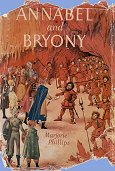
I had a similar story with Annabel and Bryony, a delightful children’s book I read when much younger. I did at least know it existed, since my sister had a copy. Eventually, after much hunting, I got my own copy, a present from my sister who had spotted it lurking in a second hand bookshop in Robin Hood's Bay. And later still, thanks to my review of it on the web, I got a further trilogy.
This evening, Charles announced: “Such a long challenge, rendered insignificant. Martin Magnus on Mars is on Kindle!” And so it is. At least we paid only a couple of quid for the hardback. And there is something different about a physical copy.
Wait, I thought. If MMoM is on Kindle, what about A&B? Sure enough, it too can now be had in non-dead tree format.
The times they are a-changin’. But I wouldn’t part with my hardback copy, battered dust jacket and all.
We each had a classic example of this from our childhood. Charles was after Martin Magnus on Mars, the third in the series, only ever published in hardback, and tough to find. So tough that, before the advent of the web, Charles was seriously wondering if he’d just imagined it! However, he eventually spotted a copy for sale, and pounced.
I had a similar story with Annabel and Bryony, a delightful children’s book I read when much younger. I did at least know it existed, since my sister had a copy. Eventually, after much hunting, I got my own copy, a present from my sister who had spotted it lurking in a second hand bookshop in Robin Hood's Bay. And later still, thanks to my review of it on the web, I got a further trilogy.
This evening, Charles announced: “Such a long challenge, rendered insignificant. Martin Magnus on Mars is on Kindle!” And so it is. At least we paid only a couple of quid for the hardback. And there is something different about a physical copy.
Wait, I thought. If MMoM is on Kindle, what about A&B? Sure enough, it too can now be had in non-dead tree format.
The times they are a-changin’. But I wouldn’t part with my hardback copy, battered dust jacket and all.
Friday, 20 September 2013
Sunday, 15 September 2013
Monday, 2 September 2013
TRUCE at ECAL
Posted on 15:50 by Unknown
One of the projects I’m working on is called TRUCE: Training and Research in Unconventional Computation in Europe. As it says on the TRUCE project website:
One issue with unconventional computation is that conventional computers have a 60 year engineering head start. Although researchers can do what are actually amazing things with their slime molds, quantum computers, chemical droplets, bacteria, DNA, optical computers, and what-not, it’s early days yet, and the applications aren’t a patch on a smartphone. What we would like to do is think about what things will be like in about 60 years time in terms of unconventional computing.
So we decided that we should get some scientists together with some speculative fiction authors, and tell narratives of possible futures. We made a call for story ideas a few months back, and got a bunch of submissions. I put one in, too, so that the project could have an “inside view” of the process. The authors looked through the submissions, and each picked out an idea they thought they could weave into a story.
The aim is that each author will write their story set in their chosen scientific background, then the scientist will write an afterword, explaining the science in a bit more detail (or possibly explaining where the author ignored the science to make the story work!) These will all be published by Comma Press some time next year.
There was some preliminary contact between authors and scientists via Skype, then we all met up at the workshop for in-depth discussions. The author-scientist pairs scattered around the conference venue for most of the day, sitting in little coffee-fueled huddles, talking through the story ideas, and the underlying science. One attendee said “that’s the longest I’ve ever talked to someone who isn’t my wife continuously on a single subject!”
In the late afternoon, we all got back together and presented the current status of our ideas. Not all of them turned out to be dystopias, fortunately, but authors tend to want an interesting plot, which usually means things going wrong! But that’s fine: we can give warnings of futures that we don’t want to happen.
So, the authors get some futuristic scientific ideas for their stories. What do the scientists get out of the process? Well, some of my work is with biologists, building simulations of complex systems, which requires me to understand quite a bit of their science, which means I ask a lot of questions. One thing they say is “I like working with computer scientists, because they ask such different questions.” Different questions are good: they make you think about things from different angles, giving a different view on the problem.
And I can now say, I like working with authors, for exactly the same reason.
We’ll be having a second call for ideas soon. So, if you are researching some aspect of unconventional computation, and would like some unconventional discussion of your work, why not submit an idea? The second round won’t get to go to Sicily – sorry! – but you will get all the other spin off benefits.
And for everyone else: look out for the book next year.
Unconventional computation (UCOMP) is an important and emerging area of scientific research, which explores new ways of computing that go beyond the traditional model, as well as quantum- and brain inspired computing. Such alternatives may encompass novel substrates (e.g., DNA, living cells, or mixtures of the two) as well as new paradigms which, for example, support combined information processing and material production (as living systems do). UCOMP researchers draw inspiration from a wide and diverse range of sources, from physics, to chemistry, biology and ecology. The field is growing quickly, and has the potential to revolutionize not only our fundamental understanding of the nature of computing, but the way in which we solve problems, design networks, do industrial fabrication, make drugs or construct buildings.
TRUCE provides an ‘umbrella organisation’ to help coordinate, nurture and develop activities within the UCOMP community in Europe and beyond.We ran a TRUCE workshop this Monday at ECAL, the European Conference on Artificial Life. Workshops at conferences are often run as mini-conferences themselves, with presented papers and posters. But we wanted to do something different, something ... unconventional.
One issue with unconventional computation is that conventional computers have a 60 year engineering head start. Although researchers can do what are actually amazing things with their slime molds, quantum computers, chemical droplets, bacteria, DNA, optical computers, and what-not, it’s early days yet, and the applications aren’t a patch on a smartphone. What we would like to do is think about what things will be like in about 60 years time in terms of unconventional computing.
So we decided that we should get some scientists together with some speculative fiction authors, and tell narratives of possible futures. We made a call for story ideas a few months back, and got a bunch of submissions. I put one in, too, so that the project could have an “inside view” of the process. The authors looked through the submissions, and each picked out an idea they thought they could weave into a story.
The aim is that each author will write their story set in their chosen scientific background, then the scientist will write an afterword, explaining the science in a bit more detail (or possibly explaining where the author ignored the science to make the story work!) These will all be published by Comma Press some time next year.
There was some preliminary contact between authors and scientists via Skype, then we all met up at the workshop for in-depth discussions. The author-scientist pairs scattered around the conference venue for most of the day, sitting in little coffee-fueled huddles, talking through the story ideas, and the underlying science. One attendee said “that’s the longest I’ve ever talked to someone who isn’t my wife continuously on a single subject!”
In the late afternoon, we all got back together and presented the current status of our ideas. Not all of them turned out to be dystopias, fortunately, but authors tend to want an interesting plot, which usually means things going wrong! But that’s fine: we can give warnings of futures that we don’t want to happen.
So, the authors get some futuristic scientific ideas for their stories. What do the scientists get out of the process? Well, some of my work is with biologists, building simulations of complex systems, which requires me to understand quite a bit of their science, which means I ask a lot of questions. One thing they say is “I like working with computer scientists, because they ask such different questions.” Different questions are good: they make you think about things from different angles, giving a different view on the problem.
And I can now say, I like working with authors, for exactly the same reason.
We’ll be having a second call for ideas soon. So, if you are researching some aspect of unconventional computation, and would like some unconventional discussion of your work, why not submit an idea? The second round won’t get to go to Sicily – sorry! – but you will get all the other spin off benefits.
And for everyone else: look out for the book next year.
Friday, 30 August 2013
Friday, 23 August 2013
Friday, 26 July 2013
sequestering carbon, several books at a time VI
Posted on 13:27 by Unknown
Saturday, 13 July 2013
waspish caterpillar
Posted on 08:12 by Unknown
I read recently, in the "Last Word" section of New Scientist, a piece asking for help to identify an Italian butterfly-like creature. The questioner couldn't identify it because "it doesn't seem like any butterfly I've seen, nor is it in any of my insect books". What caught my eye was the implication of ownership of at least three insect books. We have only the one insect book. And two butterfly books. Oh, and a dragonfly book.
Yet none of our books could help us to identify this splendid caterpillar we found in the garden today.
The reason I know that none could have helped is that I looked it up in them, after I had identified it using the web. To identify it in the first place, I googled "caterpillar black yellow stripes", and got
Looking through the results identified several promising candidates. The respective source pages all identified it as the caterpillar of the Cinnibar moth. The wikipedia page has more details, confirming the identification. But our insect book doesn't have it. Neither do our butterfly books (well, it is a moth, I suppose).
Back in the garden, the spiders (which will obviously not be in our insect book) have been busy wrapping up the plants in a dense web.
And the patio roses we bought back in early May are now blooming their hearts out.
The weeds are growing apace, but it's way too hot at the moment (28°C) to garden. So I'm blogging about the garden instead.
Yet none of our books could help us to identify this splendid caterpillar we found in the garden today.
![]() |
| at least it's on a weed |
![]() |
| it seems there are rather a lot of caterpillars using a yellow and black colour palette |
Back in the garden, the spiders (which will obviously not be in our insect book) have been busy wrapping up the plants in a dense web.
And the patio roses we bought back in early May are now blooming their hearts out.
![]() |
| The labels must have lied about the colours. I think we are going to have to separate these! |
The weeds are growing apace, but it's way too hot at the moment (28°C) to garden. So I'm blogging about the garden instead.
Sunday, 23 June 2013
boxes, whiskers, and violins
Posted on 04:41 by Unknown
My experiments with the charting language d3 continue. I'm looking at different ways to display book review statistics. For example, I'm interested in how long books sit on the shelf between being bought, and being read. It can be a long time; but how long?
A scatter plot shows all the data:
Here I have colour-coded book types as purple for non-fiction, green for science fiction, and orange for other fiction. The existence of the line is clear: I can't read books before I acquire them. (The green dot below the line in 1998 is an anomaly: either the acquisition date or the review date is wrong. I have investigated, but can't determine which, so have left it as it is.)
The scatter plot shows all the data, and provides a visual clue that maybe the time between acquisition and reading isn't too long. (Of course, this only shows the books I've acquired and read, not the ones I've acquired and are still languishing on the unread shelves!)
In order to better visualise the time delay, I plotted the data as box-and-whisker plots (showing median, quartiles, outliers, and here also the mean), overlayed with violin plots, (showing a more detailed estimate of the underlying distribution):
This was all relatively easy to do using the d3 chart library, and Jason Davies' science.js library for the kernel density estimator needed for the violin plot.
So from this I can see that I tend to read fiction almost as soon as I buy it, SF quite soon after, and that non-fiction sticks around on the shelves for longer. This probably indicates that I buy non-fiction partly as an investment (it's my pension fund!).
Maybe I should spend more time reading them, and less time learning new languages so I can analyse how fast I'm reading them?
A scatter plot shows all the data:
Here I have colour-coded book types as purple for non-fiction, green for science fiction, and orange for other fiction. The existence of the line is clear: I can't read books before I acquire them. (The green dot below the line in 1998 is an anomaly: either the acquisition date or the review date is wrong. I have investigated, but can't determine which, so have left it as it is.)
The scatter plot shows all the data, and provides a visual clue that maybe the time between acquisition and reading isn't too long. (Of course, this only shows the books I've acquired and read, not the ones I've acquired and are still languishing on the unread shelves!)
In order to better visualise the time delay, I plotted the data as box-and-whisker plots (showing median, quartiles, outliers, and here also the mean), overlayed with violin plots, (showing a more detailed estimate of the underlying distribution):
This was all relatively easy to do using the d3 chart library, and Jason Davies' science.js library for the kernel density estimator needed for the violin plot.
So from this I can see that I tend to read fiction almost as soon as I buy it, SF quite soon after, and that non-fiction sticks around on the shelves for longer. This probably indicates that I buy non-fiction partly as an investment (it's my pension fund!).
Maybe I should spend more time reading them, and less time learning new languages so I can analyse how fast I'm reading them?
Monday, 17 June 2013
book review statistics in d3
Posted on 06:55 by Unknown
My experiments with the charting language d3 continue. Now that I can happily import csv files, I decided to have a go at visualising some data about the various book reviews on my website.
First, I charted the cumulative number of reviews, of the fiction, SF, and non-fiction books:
I was surprised at the total number of reviews, as I 'd never seen this all in one place before. And I was also surprised at the relatively steady rate of reading demonstrated.
I wrote a little python script to extract the figures from the database into a csv file. I discovered that a few weeks of writing JavaScript seems to have over-written a large chunk of python syntax in my brain...
I also had a go at viewing the data according to date of publication, of acquisition, and of review. I'm still playing around with those views, working out what they can show. More experimentation is needed.
First, I charted the cumulative number of reviews, of the fiction, SF, and non-fiction books:
I was surprised at the total number of reviews, as I 'd never seen this all in one place before. And I was also surprised at the relatively steady rate of reading demonstrated.
I wrote a little python script to extract the figures from the database into a csv file. I discovered that a few weeks of writing JavaScript seems to have over-written a large chunk of python syntax in my brain...
I also had a go at viewing the data according to date of publication, of acquisition, and of review. I'm still playing around with those views, working out what they can show. More experimentation is needed.
Sunday, 16 June 2013
sequestering carbon, several books at a time V
Posted on 14:09 by Unknown
This week's haul, from Amazon and from the Europa 2013 archaeology meeting:
I've nearly finished the Kontis.
Friday, 7 June 2013
sequestering carbon, several books at a time IV
Posted on 12:22 by Unknown
The haul for the last fortnight.
I've already read the Saintcrow, and will be reviewing it imminently.
Saturday, 25 May 2013
sequestering carbon, several books at a time III
Posted on 02:01 by Unknown
This week's haul; small, but perfectly formed:
The Druon needs a little explanation. (The BtVS, on the other hand, needs no explanation.) This is an historical novel, telling the tale of the French kings of the 13th Century. It is not the kind of book we would normally buy, and is in fact a free gift from SFX, on its 18th anniversary, rewarding us for having been subscribers from day 1.
Why is SFX giving away an historical novel? Well, possibly because of the cover quote:
![]() |
| 18 years of SFX magazine |
'This is the original Game of Thrones'
George R. R. Martin
Friday, 17 May 2013
sequestering carbon, several books at a time II
Posted on 14:19 by Unknown
This is the catch from Amazon et al over the last fortnight, patiently waiting to be databased:
I'm already about a third of the way through Redshirts, and enjoying it immensely It seems obvious where it's going, so I'm assuming it will instead go somewhere completely different.
Saturday, 27 April 2013
sequestering carbon, several books at a time
Posted on 08:15 by Unknown
This week's catch, fresh from Amazon and its second hand colleagues:
All I have to do now is database them, ready to be added to the catalogue on my website.
Read them? Well, some day. Maybe.
All I have to do now is database them, ready to be added to the catalogue on my website.
Read them? Well, some day. Maybe.
Sunday, 10 March 2013
normality has been restored...
Posted on 15:02 by Unknown
...partially, anyway.
When my home machine died, and I upgraded to Windows 7, my incredibly ancient 16-bit Smalltalk/V would no longer work. As this was what I used to generate the book review pages on my website, it was a bit of a disaster.
So over the past several weekends, I've been re-implementing my book list program, from scratch, in Python, and the new pages have finally gone live. (There are still broken links from the non-automatically generated pages; I'll fix those next.)
This was my first major foray into Python. Three years ago, I wrote my first ever Python program -- a Game of Life implementation, using Gosper's hashlife algorithm -- but then didn't touch it again until recently. Instead, I was using Matlab for all my number-crunching needs. However, I needed something a bit more friendly for teaching some non-computer science students a little bit about simulation. So before Christmas I wrote a small flocking program in Python, and a few little bits and bobs. Then I learned about NumPy, which does a lot of the matrix stuff that Matlab does, so I thought I'd give it a try, by reimplementing some Random Boolean Network code I'd originally written in Matlab.
I was really impressed, so decided to do some more NumPy programming, to learn it better. I wrote a few programs to support some practicals for a module I teach: a quantum random walk simulator, an iterated function system, and a 1D cellular automaton. And after that exposure, I decided I was deeply in love with Python.
But the book list program is my biggest yet, by a long way. All the previous programs had a core of essentially about 10 lines of code (each of those lines doing a lot, mind you!), each written in an hour or so. The book list program is several hundreds of lines (many of which also do rather a lot), split over 5 files and several classes. I also decided to take the opportunity to reorganise and tidy up the structure of my web pages, which involved writing a few utilities, to rename a bunch of files, to write a new table in the database, that sort of thing. File handling. Database access. All amazingly simple in the marvellous language that is Python.
Although, frankly, I couldn't have done it without the wonderful Stackoverflow forum. The Python documentation is useful if you know how to do something, and just need to check the syntax or method name. It's not so helpful if you don't know how to do something. And Python has its own way of doing things. But every time I typed into Google: "python how to XXX", for a wide range of XXX, there was Stackoverflow with the answer -- often several answers! Thanks, guys.
When I started writing this, I was consulting online resources for nearly every line. But now, I'm happily typing things like
And I'm now looking round for my next Python project...
When my home machine died, and I upgraded to Windows 7, my incredibly ancient 16-bit Smalltalk/V would no longer work. As this was what I used to generate the book review pages on my website, it was a bit of a disaster.
So over the past several weekends, I've been re-implementing my book list program, from scratch, in Python, and the new pages have finally gone live. (There are still broken links from the non-automatically generated pages; I'll fix those next.)
This was my first major foray into Python. Three years ago, I wrote my first ever Python program -- a Game of Life implementation, using Gosper's hashlife algorithm -- but then didn't touch it again until recently. Instead, I was using Matlab for all my number-crunching needs. However, I needed something a bit more friendly for teaching some non-computer science students a little bit about simulation. So before Christmas I wrote a small flocking program in Python, and a few little bits and bobs. Then I learned about NumPy, which does a lot of the matrix stuff that Matlab does, so I thought I'd give it a try, by reimplementing some Random Boolean Network code I'd originally written in Matlab.
I was really impressed, so decided to do some more NumPy programming, to learn it better. I wrote a few programs to support some practicals for a module I teach: a quantum random walk simulator, an iterated function system, and a 1D cellular automaton. And after that exposure, I decided I was deeply in love with Python.
But the book list program is my biggest yet, by a long way. All the previous programs had a core of essentially about 10 lines of code (each of those lines doing a lot, mind you!), each written in an hour or so. The book list program is several hundreds of lines (many of which also do rather a lot), split over 5 files and several classes. I also decided to take the opportunity to reorganise and tidy up the structure of my web pages, which involved writing a few utilities, to rename a bunch of files, to write a new table in the database, that sort of thing. File handling. Database access. All amazingly simple in the marvellous language that is Python.
Although, frankly, I couldn't have done it without the wonderful Stackoverflow forum. The Python documentation is useful if you know how to do something, and just need to check the syntax or method name. It's not so helpful if you don't know how to do something. And Python has its own way of doing things. But every time I typed into Google: "python how to XXX", for a wide range of XXX, there was Stackoverflow with the answer -- often several answers! Thanks, guys.
When I started writing this, I was consulting online resources for nearly every line. But now, I'm happily typing things like
reviews = [bk for bk in have_reviews if bk.isNFBook()][0:10]without looking things up any more.
And I'm now looking round for my next Python project...
Sunday, 9 December 2012
Sir Patrick Moore, 1923 - 2012
Posted on 07:46 by Unknown
Sir Patrick Moore, astronomer, presenter of The Sky At Night since 1957, author of many popular astronomy books, inspiration to several generations of astronomers, myself included, has died. Still sitting on our TV's hard disc recorder is last Monday's episode of The Sky At Night, not yet watched. Goodbye, Patrick.
![]() |
| Patrick Moore |
![]() |
| The Sky At Night, "A Night to Remember". The BBC's 1969 moon landing team: Patrick Moore, Cliff Michelmore, James Burke (but why is this picture reversed?) |
![]() |
| Patrick Moore (photo credit: Paul Grover, from Telegraph article in 2010) |
Subscribe to:
Posts (Atom)